
Prepare for the questions that matter.
Connect the evidence, clinical context and field priorities in a discussion guide your MSL team can use.
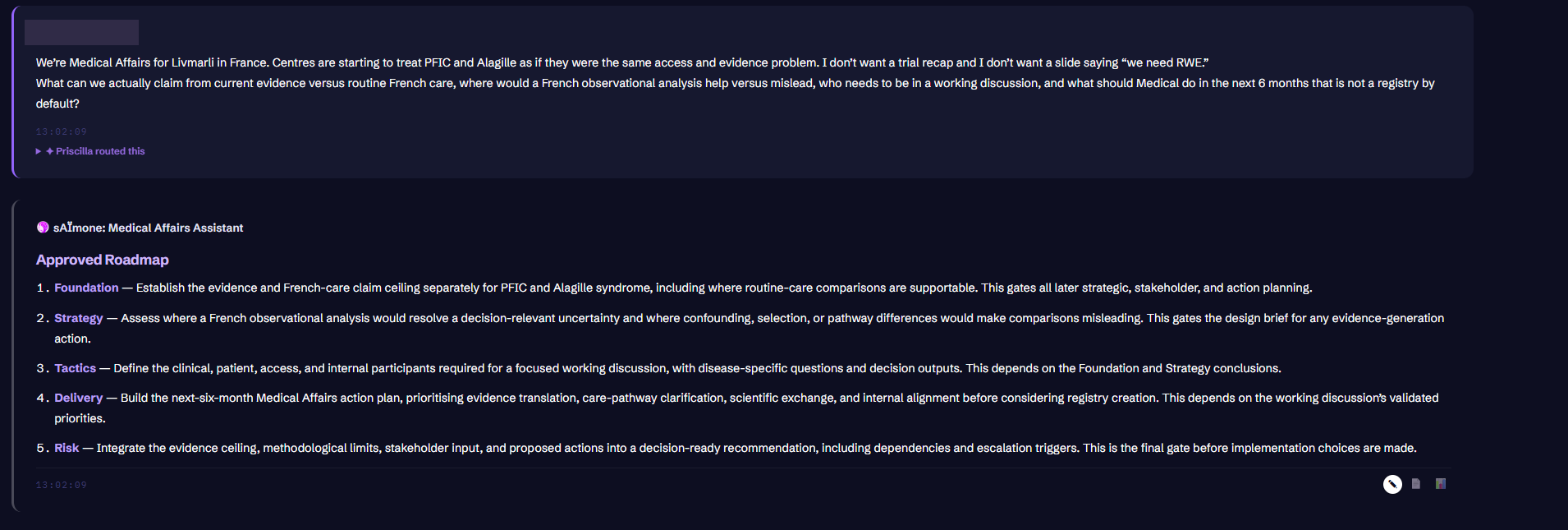
sAÏmone brings specialist AI agents, scientific evidence and analytical tools together in one platform for Medical Affairs and medical communications teams. Use it to research scientific questions, compare strategic options and develop plans, briefings and scientific materials.
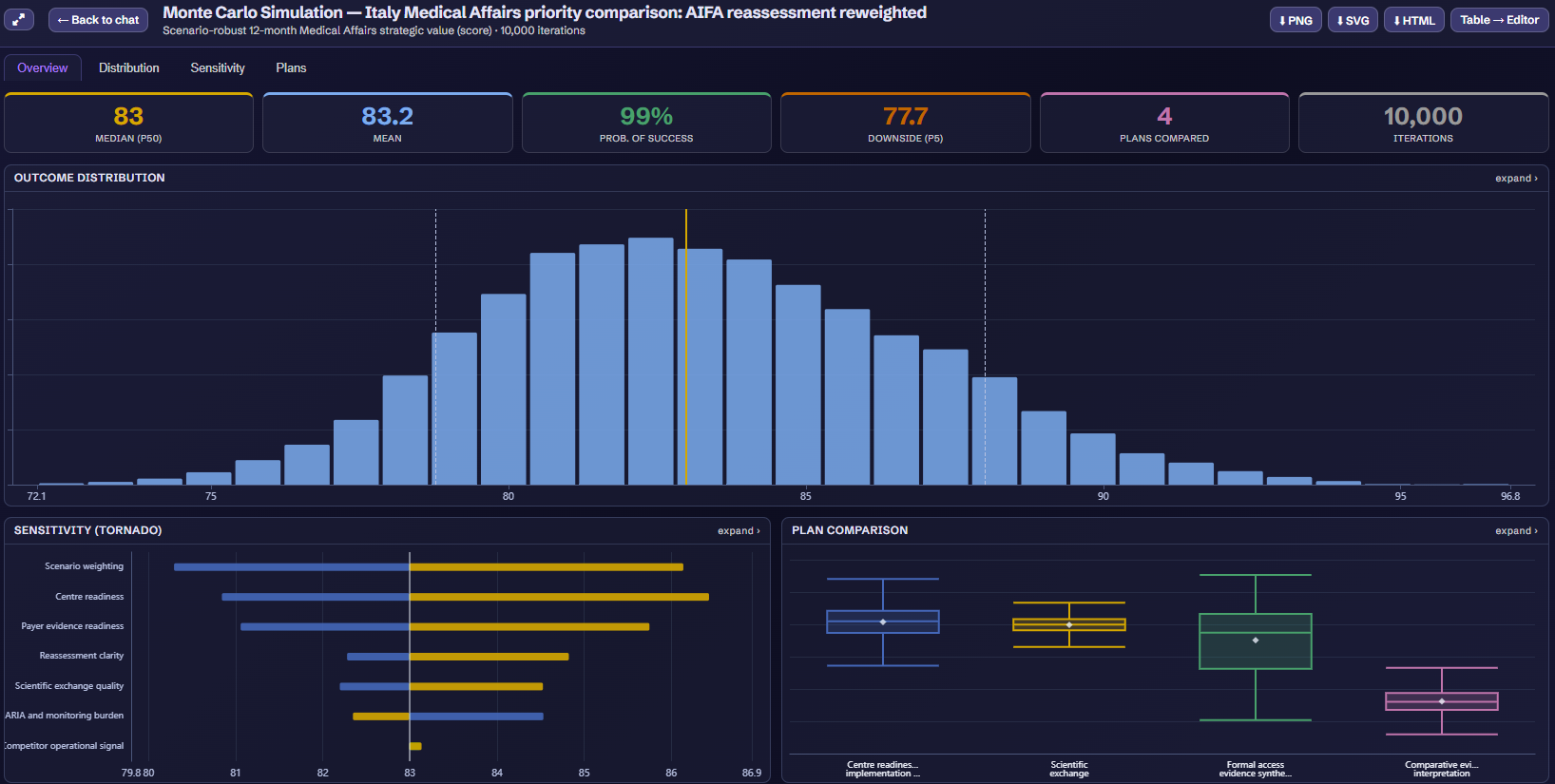
From a focused scientific question to a wider programme, bring the capabilities together around the problem.
Connect the evidence, clinical context and field priorities in a discussion guide your MSL team can use.
Develop an evidence-led narrative, an education programme or a writer handoff shaped for its audience.
Compare approaches, examine practical constraints and test which assumptions could change the recommendation.
Look closer at how you organise work, explore evidence and shape the conversation.
Use the capabilities your question needs. A focused answer does not need a full programme.
For a broader brief, sAÏmone can organise connected pieces of work, use what has already been established and carry the findings into the next step. You can continue, redirect or revise as the work develops.
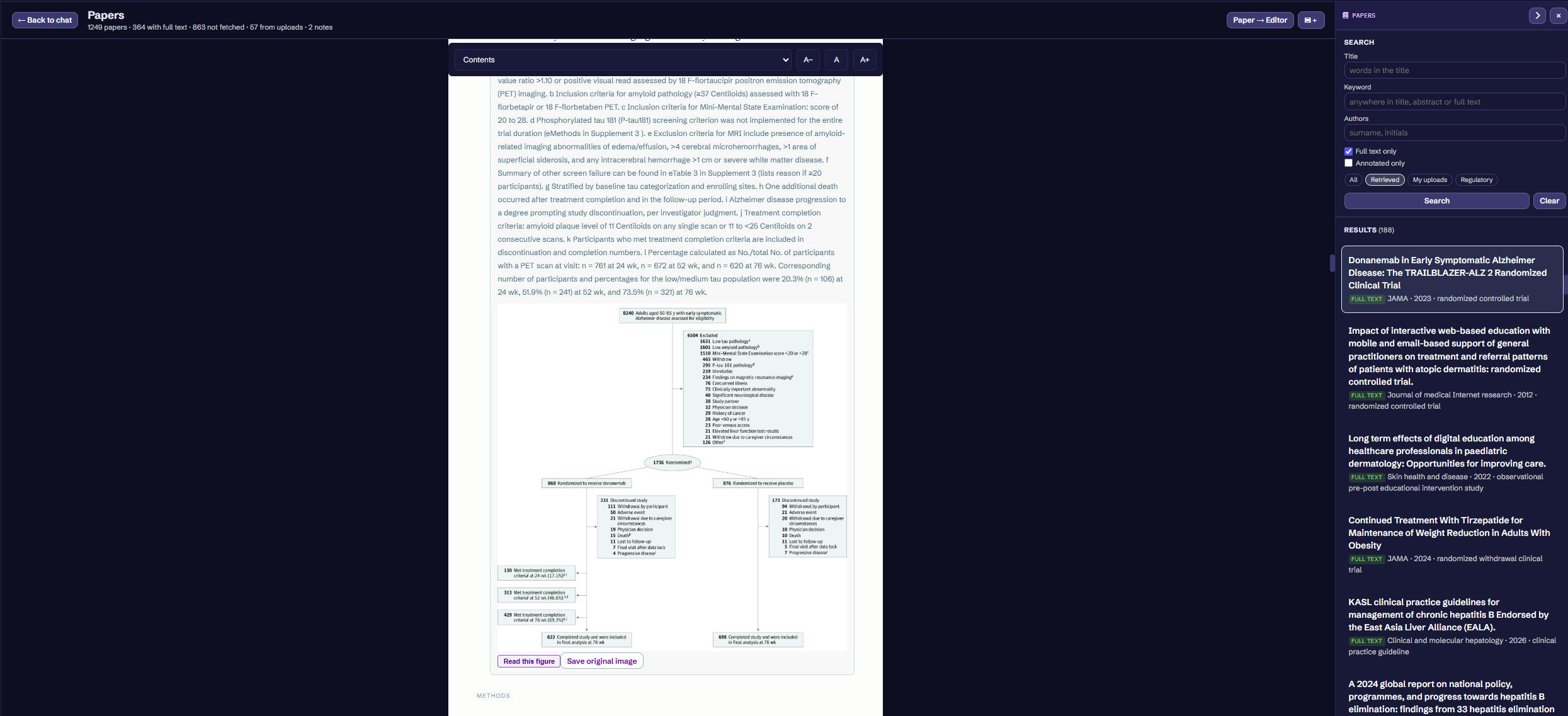
Open retrieved papers alongside your work. Explore the available full text and figures, search the library, and bring relevant material into the editor.
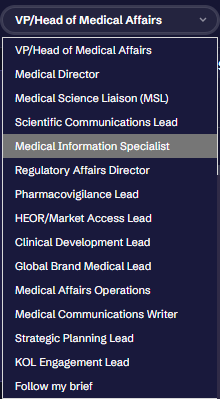
Choose a Medical Affairs perspective to focus attention. Your objective and intended audience still lead the work, whether you need a scientific discussion, a strategic recommendation or a communications brief.
Adjust the audience, emphasis or scope in ordinary language. Add the refinement to your message, review it and continue the conversation.
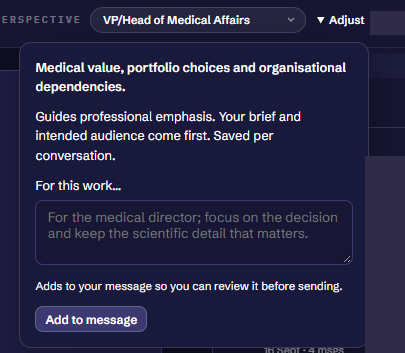
The research can be extensive. The output should be proportionate to the question and useful to the person receiving it.
See how it comes togetherBring together curated knowledge, published evidence, live research and relevant prior work. Inspect the sources behind the findings.
Develop options, understand stakeholders and examine uncertainty. Use simulations or strategic computation where they help answer the question.
Shape the work for its audience. Move from analysis to a clear brief, a scientific narrative, an editable document or a presentation.
Return to saved work, reuse relevant findings and change direction without starting the whole conversation again.
When a choice depends on uncertain conditions, sAÏmone can use simulations and strategic computation to compare options. The results help inform the judgement and remain open to revision as the evidence or assumptions change.
How computation supports the workExamine ranges, trade-offs and the conditions under which one approach performs better.
Keep measured evidence, adapted experience and planning assumptions distinct.
Revisit a material assumption and carry the useful findings into the next piece of work.
Bring a Medical Affairs or scientific communications question. We’ll show you how sAÏmone can support the research, thinking and work it calls for.
saimone.avti@gmail.com